It has been a couple of months since I last posted, and for much of that time I have been carrying buckets and watering cans around my gardens, fighting a rearguard action against advancing drought and heat. When the restricted time allowed for watering each morning has passed, it has been out with the rakes and pruning gear, refreshing fire breaks, or up the ladder, cleaning gutters of the dead needles strewn from the Casuarinas by the hot, dry winds of spring and summer.
There was one half decent fall of rain in November, and a few miserly, drizzly showers in December, before the heat grew fiercer, the wind stronger, and the moisture was sucked from the ground again.
As 2019 entered its final weeks we watched the northern ranges of NSW burn, and then, as Christmas approached, the central ranges were aflame, along with the southern ranges and coast, as well as much of Victoria, South Australia, West Australia, and Tasmania. Smoke became our atmosphere as gardens wilted and the younger trees and shrubs began to die. Lawns, well, they turned tawny long ago, and were now crumbling into the dust.
The stream beside our garden, once a reliable place to fish for trout, perch and yabbies, was reduced to a few shallow, muddy, smelly puddles, from which, after the temperatures passed 40 degrees Celsius, I had to net and bury the floating carcasses of oxygen deprived fish. The level of the lake at the head of our little Valley on the Mountain began falling faster as the water bombing helicopters joined the westerly wind in sucking up its water.
As the smoke grew thicker, ash and charred leaves began to gently drift down and sprinkle everything with grey and black. The sound of sirens became just part of the ambient noise of the Mountains, and the news grew ever more alarming. Computers were set permanently to displaying the RFS fire maps and playing the local RFS radio frequency, in the hope that it might give us sufficient warning should the fires to our north and south suddenly change course.
Across the country, houses and then whole villages were destroyed, and lives were lost, including fire fighters. Whole towns were forced to wade or drive into the salt water as flames of a ferocity not seen before charged all the way to the back of the beach. Other towns didn't have the luxury of lake or ocean to flee to.
In one case a surge of fiery wind flipped a ten ton fire tanker over, killing one of its crew and injuring the others. I have been in some pretty lively fires over the years, and been singed several times in the fighting of them, but I had never seen, or heard of, anything like that before. Trees falling on or near trucks, and crown fires sweeping overhead and forcing crews to turn on the cabin spray bars and hunker down under fire blankets - yep, not so uncommon in the world of bushfire fighting, but that was just beyond anyone's experience.
The conversation here in the Mountains turned to safe places and suitable evacuation destinations - to stay and fight, or get out now, rather than be caught in heavy traffic on the long, bush-lined, winding road to the safety of the City on the Plain.
As the smoke grew darker and the ash fell thicker, the air tankers began their bombing runs, laying long red swathes of water and fire retardent along the village edges. Villages once described by real estate agents as "leafy refuges from the bustle of city life" were suddenly tiny, dangerously exposed enclaves within a huge expanse of potentially explosive forest and bush. More houses and sheds burned, and residents who had not already fled were being told to take cover as it was now too late to leave safely.
Then the weather, at least on our Mountain, turned, and in less than two weeks we have had more rain than fell in the final three months of 2019. RFS stations across much of the state have "stood down" and for the first time in many, many weeks, their roller doors are closed - their tankers quietly parked inside. In Victoria, the battle continues, while in parts of Queensland, the fire fighters have retired but the SES is now flat out dealing with storms and flooding. Oh, Australia....
At first glance, the green we Mountains Folk are accustomed to has returned. The air no longer smells of charred bush, and the lawn mower had its first exercise since very early spring. Dig deeper though - scratch among the mulch for example and find dry pockets of soil, or wander down to the barely trickling creek and look at its exposed, muddy banks, and it is obvious we have received a respite rather than a complete reprieve. Three or four days of hot westerly wind and we could be facing the fires again.
But for the moment, we are enjoying the cool and damp. The ducks who normally lived by the shady pool down stream from the orchard had left us, but are back now that the water has returned to their favourite bathing spots - and little swirls show where, somehow, a few minnows survived the worst couple of weeks when the creek had only one small but shaded pond left for them to swim in.
Perhaps, in a season or two, there will be redfin perch in our pools again, but I doubt the water will ever again be consistently cool enough to keep trout happy and healthy.
Our Magpies are happily finding food on their own account, instead of relying on scraps of mince from us to keep their younglings half satisfied. We even had a visitor not seen before - a juvenile Ibis.
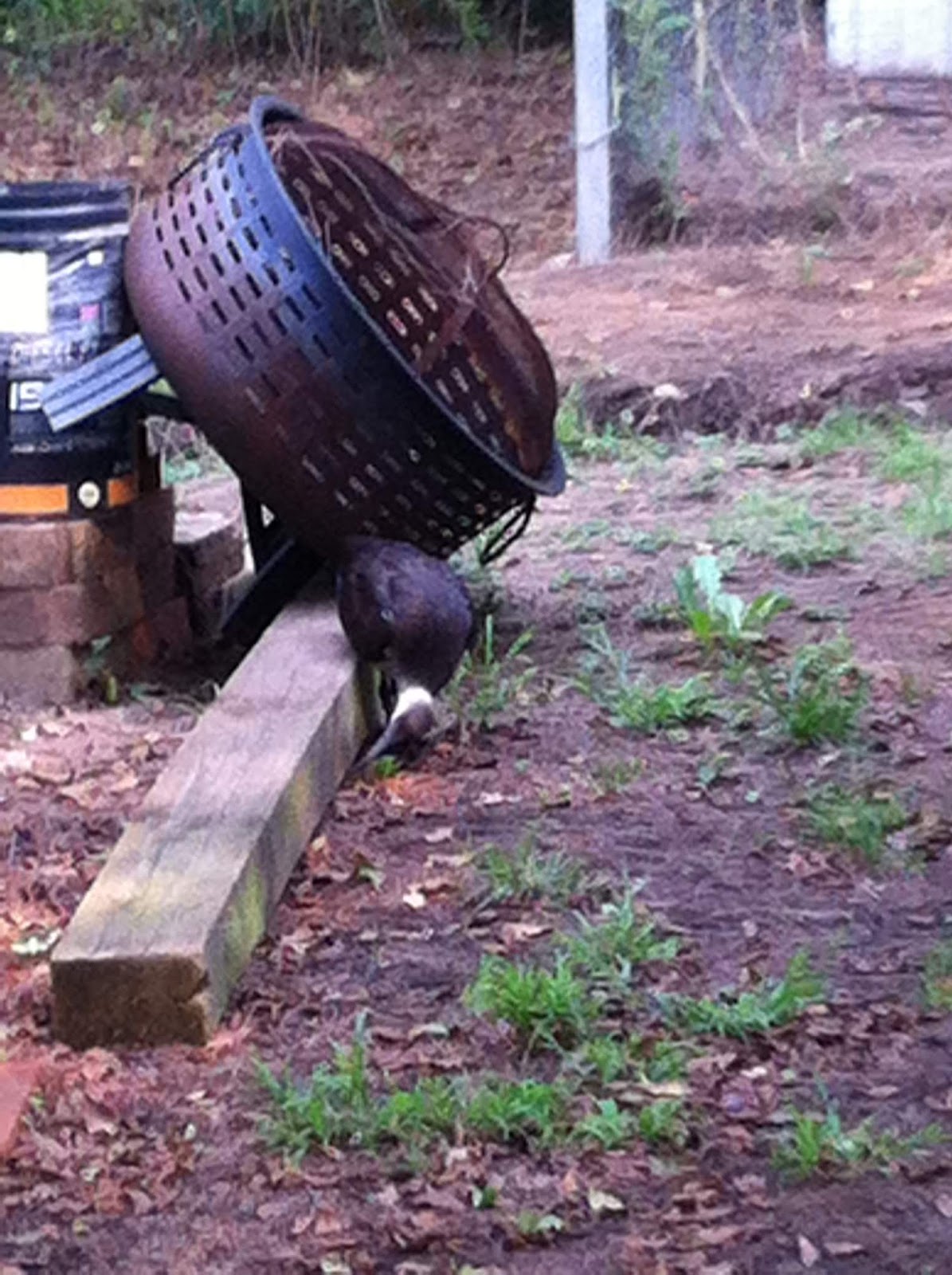
The grandkids wanted to name it Bin Chicken, but we settled on Binni - and he or she did a fine job of thinning out the snails and slugs that reappeared all over our garden within a couple of days of the first good rainfall.
Binni appears to have moved on again. If the rain keeps falling, as it is again just now, we might be able to move on from this awful time and enjoy regrowth and green shoots. If only our "leaders" would also move on from whatever venal or ideological fixation it is that has crippled their willingness to deal with the all too evident, looming disaster that is climate change. Oh, Australia...
A blog about writing, reading, art, music, and nature
Showing posts with label bushfire. Show all posts
Saturday, 18 January 2020
Thursday, 14 November 2019
Aflame
The lovely rain I described in my last post - almost two months ago - was followed by only a few showers before the heat and dry wind swept in from the west, bearing the hopes, dreams, and topsoil of generations of farmers with it. Those winds, as they whirled and tore at our gardens, have sucked most of the remaining moisture from our soil - Jamieson Creek no longer sings to us, but merely seeps down between exposed banks and tree roots, creeping towards the falls, and Lake Burragorang beyond.
It wasn't long before the smoke followed the dust, heralding the onset of one of our nastier fire seasons. The Valley on The Mountain is so far unscathed by fire, apart from one escaped campfire in the scrub behind the lake. The warnings of Catastrophic fire weather kept many of the usual tourists back down in The City on The Plain, and many of our local people decided it would be a good place to spend a couple of days, too. We were fortunate that only a few, small fires broke out in the Blue Mountains this week, though they kept the firefighters and residents busy enough.
From any high point around here, in recent days, the huge clouds of smoke from the Gospers Mountain fire have made a startling curtain across the northern horizon. Other days, The City has been invisible in a pall of smoke and air pollution, and I am glad my lungs are operating in a different part of the atmosphere.
My writer's conscience, despite the lack of blog posts in recent months, had not been bothering me as much as usual - this partly because of the progress I am making with the final edit of my current attempt at a novel, and partly because keeping the gardens alive, reconstructing an ageing and decrepit deck, tearing down old fencing, and filling vacant spots at the library have all but drowned it out. Until now, when, suddenly, it has been awakened by circumstance.
With the worsening of the fire season has come the regular barrage of toxic politicking and trolling that inevitably launches itself at the throat of any who dare ask or suggest the question "Is this weather/fire danger/drought being made worse by climate change?"
Some of the nastier and loonier responses have come from our former Deputy Prime Minister, Barnaby Joyce, who dismissed the deaths of two people in the fires with the observation that they "most likely voted Green" - a comment that carried with it the unspoken implication that their deaths were thus their own fault for supporting the wrong political party.
Could he say with certainty that they voted that way? Well, no, but it doesn't matter because Barnaby was off on a new tangent, blaming the bushfires on changes to the sun's magnetic fields. Does he really believe any of this nonsense?
Probably not, but it serves to stir up certain parts of his support base for whom labels like "Greenie" or "Conservationist" or "National Parks" are triggers guaranteed to induce a frothing, apoplectic rage at those "others", while making sure that they are more likely to vote for Barnaby in the future.
Across all forms of media, but especially the internet, the old straw men are set up and knocked over, as the trolls manufacture posts to "prove" that the fires are all the fault of the "Greenies" who have obstructed all forms of hazard reduction until the inevitable firestorms erupt - or are the fault of the National Parks and Wildlife Service, who have "locked up" the Parks to prevent any burning off occurring in them.
My experience is the opposite of those lies. I did twenty years of service with the VBFB and RFS, as well as some paid firefighting with NP&WS, in a rural area that consisted of entangled farms, State Forest, weekend properties, and National Parks.
My brigade had a large membership, and was one of the busiest in the shire - indeed, one of the busiest in the Hunter Valley. We regularly worked with NP&WS on hazard reductions in and around the adjacent National Parks, and they helped us whenever they could - despite being perpetually understaffed. The claims that no HRs happen in Parks is just completely untrue. NP&WS not only planned these things well ahead, but talked to us about what they hoped to acheive.
As for those detestable Greenies that so quickly raise Barnaby and Co's blood pressure - many members of my brigade and the neighbouring brigades espoused Green or conservationist political views. Did they vote Green? I wasn't looking over their shoulders at the ballot box, but some of them did hand out Green how to vote cards, so probably.
The brigades in our sector were peopled by people - community members - of various genders - male and female, straight and gay - young (16) and old (up to almost 80) - from a variety of ethnic, cultural, belief, and non-belief backgrounds - and from all across the educational and social spectrum of Australian society.
They were all, no matter what political or personal labels some might like to pin on them, there when needed, sweating in the smoke and flames and dust and diesel fumes, risking their very lives for the sake of the community, near and far. They attended small hazard reductions, huge blazes, long campaign fires, out of area responses to fire, flood, and other emergencies.
They attended house fires, air crashes, car crashes - some fatal, truck fires, flood rescues, and looked for lost bushwalkers and missing children. They cut steps down steep hillsides to help the ambulance teams reach motorcycle riders who had unexpectedly parted ways with their machines and ended up in the bottom of a gulley, down among the thorns and death adders.
They worked all night with their own chainsaws, as well as the ones from the fire tankers, clearing away hundreds of fallen trees along the main road and private driveways, checking on the safety of every resident in the district, after a tornado carved a 40 km long scar through the forests and farms of our area.
Those "Greenies" that Barnaby and his ilk so despise and condemn lived in the bush too - they turned out with the rest of the brigade (Green, Liberal, Labor, Democrat, Country Party, or donkey voter) to carry out hazard reductions and other fire mitigation preparations, and they looked after their own properties and kept an eye on their neighbours welfare too.
When politicians write off people or classes of people by applying a sneering label to them, they are treating the whole community with contempt, and dodging their own obligations as elected members of our governing class to work for the benefit of all our people - not merely for themselves.
It wasn't long before the smoke followed the dust, heralding the onset of one of our nastier fire seasons. The Valley on The Mountain is so far unscathed by fire, apart from one escaped campfire in the scrub behind the lake. The warnings of Catastrophic fire weather kept many of the usual tourists back down in The City on The Plain, and many of our local people decided it would be a good place to spend a couple of days, too. We were fortunate that only a few, small fires broke out in the Blue Mountains this week, though they kept the firefighters and residents busy enough.
From any high point around here, in recent days, the huge clouds of smoke from the Gospers Mountain fire have made a startling curtain across the northern horizon. Other days, The City has been invisible in a pall of smoke and air pollution, and I am glad my lungs are operating in a different part of the atmosphere.
My writer's conscience, despite the lack of blog posts in recent months, had not been bothering me as much as usual - this partly because of the progress I am making with the final edit of my current attempt at a novel, and partly because keeping the gardens alive, reconstructing an ageing and decrepit deck, tearing down old fencing, and filling vacant spots at the library have all but drowned it out. Until now, when, suddenly, it has been awakened by circumstance.
With the worsening of the fire season has come the regular barrage of toxic politicking and trolling that inevitably launches itself at the throat of any who dare ask or suggest the question "Is this weather/fire danger/drought being made worse by climate change?"
Some of the nastier and loonier responses have come from our former Deputy Prime Minister, Barnaby Joyce, who dismissed the deaths of two people in the fires with the observation that they "most likely voted Green" - a comment that carried with it the unspoken implication that their deaths were thus their own fault for supporting the wrong political party.
Could he say with certainty that they voted that way? Well, no, but it doesn't matter because Barnaby was off on a new tangent, blaming the bushfires on changes to the sun's magnetic fields. Does he really believe any of this nonsense?
Probably not, but it serves to stir up certain parts of his support base for whom labels like "Greenie" or "Conservationist" or "National Parks" are triggers guaranteed to induce a frothing, apoplectic rage at those "others", while making sure that they are more likely to vote for Barnaby in the future.
Across all forms of media, but especially the internet, the old straw men are set up and knocked over, as the trolls manufacture posts to "prove" that the fires are all the fault of the "Greenies" who have obstructed all forms of hazard reduction until the inevitable firestorms erupt - or are the fault of the National Parks and Wildlife Service, who have "locked up" the Parks to prevent any burning off occurring in them.
My experience is the opposite of those lies. I did twenty years of service with the VBFB and RFS, as well as some paid firefighting with NP&WS, in a rural area that consisted of entangled farms, State Forest, weekend properties, and National Parks.
My brigade had a large membership, and was one of the busiest in the shire - indeed, one of the busiest in the Hunter Valley. We regularly worked with NP&WS on hazard reductions in and around the adjacent National Parks, and they helped us whenever they could - despite being perpetually understaffed. The claims that no HRs happen in Parks is just completely untrue. NP&WS not only planned these things well ahead, but talked to us about what they hoped to acheive.
As for those detestable Greenies that so quickly raise Barnaby and Co's blood pressure - many members of my brigade and the neighbouring brigades espoused Green or conservationist political views. Did they vote Green? I wasn't looking over their shoulders at the ballot box, but some of them did hand out Green how to vote cards, so probably.
The brigades in our sector were peopled by people - community members - of various genders - male and female, straight and gay - young (16) and old (up to almost 80) - from a variety of ethnic, cultural, belief, and non-belief backgrounds - and from all across the educational and social spectrum of Australian society.
They were all, no matter what political or personal labels some might like to pin on them, there when needed, sweating in the smoke and flames and dust and diesel fumes, risking their very lives for the sake of the community, near and far. They attended small hazard reductions, huge blazes, long campaign fires, out of area responses to fire, flood, and other emergencies.
They attended house fires, air crashes, car crashes - some fatal, truck fires, flood rescues, and looked for lost bushwalkers and missing children. They cut steps down steep hillsides to help the ambulance teams reach motorcycle riders who had unexpectedly parted ways with their machines and ended up in the bottom of a gulley, down among the thorns and death adders.
They worked all night with their own chainsaws, as well as the ones from the fire tankers, clearing away hundreds of fallen trees along the main road and private driveways, checking on the safety of every resident in the district, after a tornado carved a 40 km long scar through the forests and farms of our area.
Those "Greenies" that Barnaby and his ilk so despise and condemn lived in the bush too - they turned out with the rest of the brigade (Green, Liberal, Labor, Democrat, Country Party, or donkey voter) to carry out hazard reductions and other fire mitigation preparations, and they looked after their own properties and kept an eye on their neighbours welfare too.
When politicians write off people or classes of people by applying a sneering label to them, they are treating the whole community with contempt, and dodging their own obligations as elected members of our governing class to work for the benefit of all our people - not merely for themselves.
Sunday, 1 October 2017
Risky Business in the Garden
I did a terrible, brutal thing to a couple of trees just recently. It wasn't their fault - it was mine. I had not allowed as well as I should have for the likely growth of a larger neighbour, in root or branch, and put two little apple trees in a spot that seemed perfect - until the Alnus Jorullensis grew faster than anticipated.
It stretched its leafy limbs out to cut off too much of the summer sun that the apples needed, and its larger roots intertwined themselves through the roots of the smaller trees. Four or five years passed before I was certain of my mistake, and a couple more before I found myself with the time and enthusiasm to attept a remedy.
After a fairly mild winter, the frost finally bit hard, the trees all fell dormant, and I struck; first with the heavy pruning shears, then the handsaw, and, finally, the mattock and the big spud bar. When levered up and onto their sides, they were far to heavy to move on my own - each root ball and tree combined weighed well over a hundred kilos. After considering how much more damage they could sustain and still survive, I went for the hydraulic option, and spent half an hour or so using the hose on the roots of each tree.
It was a good choice, as it happens - as the soil and stones fell away from the apple tree roots, it revealed a tangle of alder, kikuyu and couch grass roots that were threaded through the mass. Soon after, they were in their new home, close to some other apple trees, and well clear of the Alders.
They stood forlorn, almost completely bare of twig or bud, for a month or so, as I poured water at their feet every day, and begged their forgiveness - and then the first spring heatwave struck, followed closely by the second.
The few remaining twigs and small branches produced a few tentative green sprouts, and my hopes rose. Not too far, as the new growth was sparse, but there seemed to be a chance. More warm days arrived, and the undisturbed trees around the two new arrivals were flourishing. I tried to ignore them, not wanting to invest too much hope after the brutality I had inflicted, and that's why I did not immediately notice the miracle.
Tiny buds, pink at first, but greening as they stretched and thickened, had appeared near the stubs of the branches that had been cut away before the move. Soon, more buds appeared at other spots along the previously smooth, grey-green bark, and within days they were opening out into rosettes of beautiful, soft, luscious pink and green leaves. A few of the surviving twigs even produced flowers, some of which appear to be setting fruit.
Why was I surprised, I ask myself now - after all, I have lived and worked in the bush of eastern Australia for quite a few years, and have often observed the miracle that occurs after bushfires have seared the forest and blackened or vaporised everything above ground. For while, all is white, grey, or black, but within weeks, those first tiny buds push through charred bark, or rise from hidden ligno-tubers, and soon the pink, red, orange and green rainbow of new growth in the eucalyptus and angophora forsts is everywhere.
The trees of the dry sclerophyll forest are so tough that I have seen trees with new shoots up to a couple of feet long fall over as long as three months after the fire attacked - victims of a hidden, smouldering cancerous spark that had entered through a crack and slowly, and persistently grown, as it chewed away at the timber between the bark and the termite-created hollow where the heartwood should have been. In an opposite fashion, the wind-shattered new growth of the willows along the creek, that were hurled down to their doom when roofs and windows were being rattled a few weeks ago, did not complain, but lay there in the damp fringes of the pools and rapids, putting out green leaves and tangles of white and pink roots.
While the bushman side of me understood that toughness, it thinks of the pampered and over nurtured trees and shrubs of the fruit and vegetable garden as too soft to withstand harsh treatment. But, of course, they are not as weak as we think - though plenty of water, seaweed solution, and dilute fertilizer all probably aided their recovery - and they remind us of just how persistent life is.
After all, everything now alive is descended from stock that somehow made it through massive ice ages, asteroid impacts, tectonic turmoil, and constant attacks from other life that desired to eat it.
Life, I have often said, is Persistent Organisation in Opposition to Entropy, and what a beautiful, wonderful thing it can be, and how sad that the one thing so much life on Earth seems unable to survive is the onset of Humankind.
The White Cockatoos like the Alders, despite the lack of food.
After a fairly mild winter, the frost finally bit hard, the trees all fell dormant, and I struck; first with the heavy pruning shears, then the handsaw, and, finally, the mattock and the big spud bar. When levered up and onto their sides, they were far to heavy to move on my own - each root ball and tree combined weighed well over a hundred kilos. After considering how much more damage they could sustain and still survive, I went for the hydraulic option, and spent half an hour or so using the hose on the roots of each tree.
It was a good choice, as it happens - as the soil and stones fell away from the apple tree roots, it revealed a tangle of alder, kikuyu and couch grass roots that were threaded through the mass. Soon after, they were in their new home, close to some other apple trees, and well clear of the Alders.
They stood forlorn, almost completely bare of twig or bud, for a month or so, as I poured water at their feet every day, and begged their forgiveness - and then the first spring heatwave struck, followed closely by the second.
The few remaining twigs and small branches produced a few tentative green sprouts, and my hopes rose. Not too far, as the new growth was sparse, but there seemed to be a chance. More warm days arrived, and the undisturbed trees around the two new arrivals were flourishing. I tried to ignore them, not wanting to invest too much hope after the brutality I had inflicted, and that's why I did not immediately notice the miracle.
Tiny buds, pink at first, but greening as they stretched and thickened, had appeared near the stubs of the branches that had been cut away before the move. Soon, more buds appeared at other spots along the previously smooth, grey-green bark, and within days they were opening out into rosettes of beautiful, soft, luscious pink and green leaves. A few of the surviving twigs even produced flowers, some of which appear to be setting fruit.
Why was I surprised, I ask myself now - after all, I have lived and worked in the bush of eastern Australia for quite a few years, and have often observed the miracle that occurs after bushfires have seared the forest and blackened or vaporised everything above ground. For while, all is white, grey, or black, but within weeks, those first tiny buds push through charred bark, or rise from hidden ligno-tubers, and soon the pink, red, orange and green rainbow of new growth in the eucalyptus and angophora forsts is everywhere.
The trees of the dry sclerophyll forest are so tough that I have seen trees with new shoots up to a couple of feet long fall over as long as three months after the fire attacked - victims of a hidden, smouldering cancerous spark that had entered through a crack and slowly, and persistently grown, as it chewed away at the timber between the bark and the termite-created hollow where the heartwood should have been. In an opposite fashion, the wind-shattered new growth of the willows along the creek, that were hurled down to their doom when roofs and windows were being rattled a few weeks ago, did not complain, but lay there in the damp fringes of the pools and rapids, putting out green leaves and tangles of white and pink roots.
While the bushman side of me understood that toughness, it thinks of the pampered and over nurtured trees and shrubs of the fruit and vegetable garden as too soft to withstand harsh treatment. But, of course, they are not as weak as we think - though plenty of water, seaweed solution, and dilute fertilizer all probably aided their recovery - and they remind us of just how persistent life is.
After all, everything now alive is descended from stock that somehow made it through massive ice ages, asteroid impacts, tectonic turmoil, and constant attacks from other life that desired to eat it.
Life, I have often said, is Persistent Organisation in Opposition to Entropy, and what a beautiful, wonderful thing it can be, and how sad that the one thing so much life on Earth seems unable to survive is the onset of Humankind.
Subscribe to:
Posts (Atom)